EIN vs ITIN: Key Differences for Non-Residents (2026 Guide)
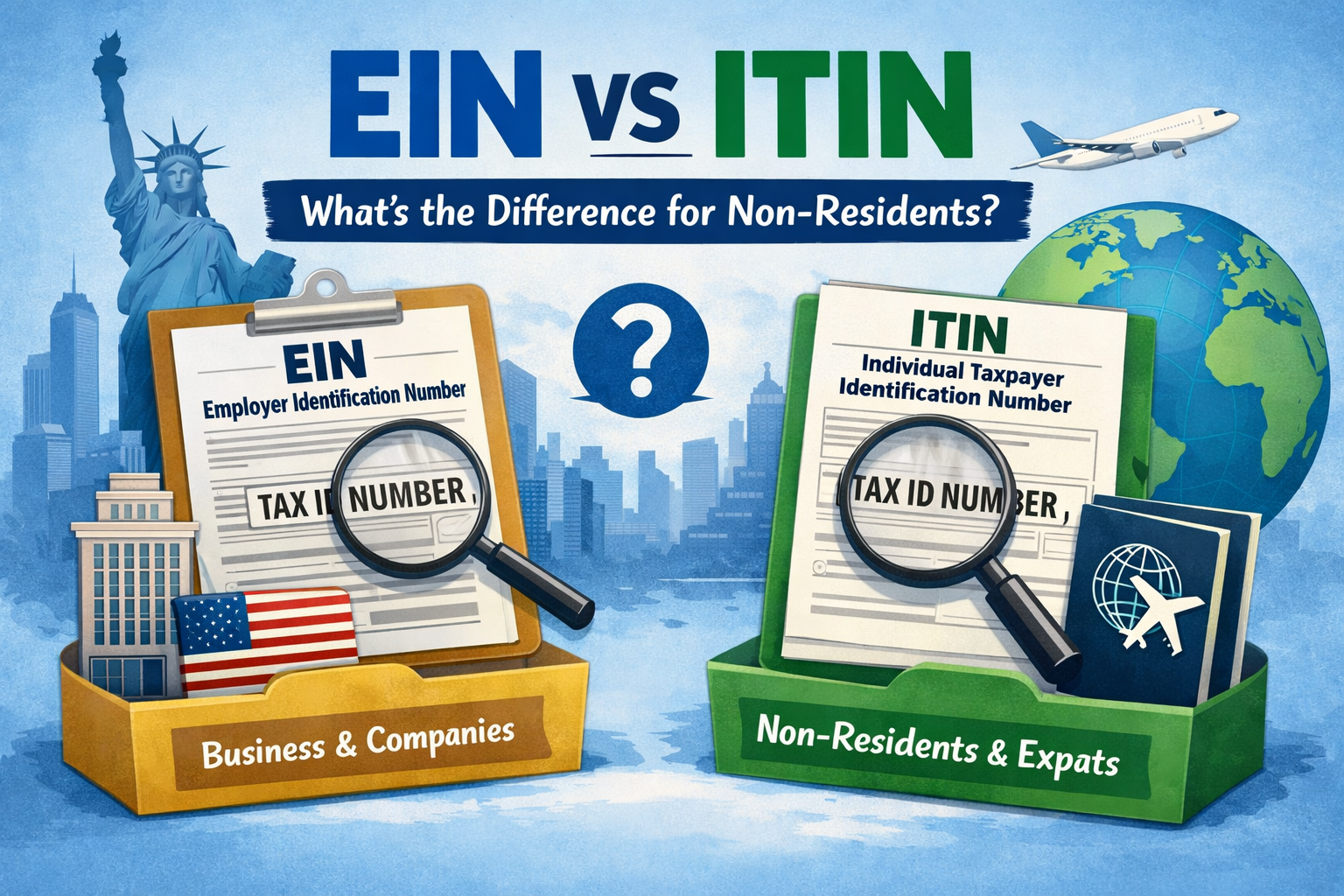
If you are a non-resident planning to start a business, sell on Amazon USA, or handle financial activities in the United States, you will likely come across two important tax identification numbers: EIN (Employer Identification Number) and ITIN (Individual Taxpayer Identification Number). Understanding the difference between these two is crucial for compliance, smooth business operations, and avoiding legal complications.
In this guide, we’ll break down the key differences between EIN vs ITIN for non-residents, their purposes, and which one you actually need.
What is an EIN?
An Employer Identification Number (EIN) is a unique nine-digit number issued by the IRS (Internal Revenue Service) to identify a business entity. It works like a Social Security Number (SSN), but for businesses.
Key Features of EIN:
- Issued to business entities (LLCs, corporations, partnerships)
- Required for opening a US business bank account
- Needed to hire employees in the US
- Essential for filing business taxes
- Used by Amazon sellers, Shopify store owners, and eCommerce businesses
👉 Good news for non-residents: You do not need a Social Security Number to apply for an EIN.
What is an ITIN?
An Individual Taxpayer Identification Number (ITIN) is also issued by the IRS, but it is designed for individuals who are required to have a US tax identification number but are not eligible for an SSN.
Key Features of ITIN:
- Issued to individuals, not businesses
- Used for personal tax reporting
- Required for non-residents earning US income
- Helps in filing federal tax returns
- Sometimes required for opening certain financial accounts
EIN vs ITIN: Key Differences
Here’s a clear comparison to help you understand:
| Feature | EIN | ITIN |
|---|---|---|
| Full Form | Employer Identification Number | Individual Taxpayer Identification Number |
| Issued To | Businesses (LLC, Corporation) | Individuals |
| Purpose | Business tax identification | Personal tax identification |
| Required For | Running a business, hiring employees | Filing personal taxes |
| SSN Required? | No (for non-residents) | No |
| Used by Non-Residents | Yes (for US business) | Yes (for tax compliance) |
Which One Do Non-Residents Need?
The answer depends on your situation:
✔️ You Need an EIN If:
- You are starting a US LLC or corporation
- You want to sell on Amazon USA, eBay, or Shopify
- You need to open a business bank account in the US
- You plan to hire employees or work with US vendors
✔️ You Need an ITIN If:
- You are earning US-sourced income personally
- You need to file a US personal tax return
- You are a partner in a US business
- The IRS requires individual identification for tax purposes
Can You Have Both EIN and ITIN?
Yes, many non-residents actually need both.
For example:
- If you own a US LLC → you need an EIN for the business
- If you personally file taxes in the US → you may need an ITIN
They serve different purposes and are not interchangeable.
EIN vs ITIN for Amazon Sellers
If you're a non-resident Amazon seller:
- EIN is usually sufficient for running your business
- ITIN is generally not required unless you have personal tax obligations in the US
Most non-resident sellers prefer EIN because it simplifies tax reporting and helps avoid unnecessary complications.
Final Thoughts
Understanding the difference between EIN vs ITIN is essential for non-residents entering the US business ecosystem. While both are issued by the IRS, they serve completely different purposes:
- EIN = Business Identity
- ITIN = Personal Tax Identity
Choosing the right one (or both) depends on your business structure and tax responsibilities.
Ready to start your US business?
Join hundreds of global founders who formed their LLCs with us.
Get Started Today